.svg)



Dilemma of Multiple Job Offers
Receiving multiple offers is a sign that you’re doing something right, especially when multiple job offers at once arrive unexpectedly. The situation produces an ongoing conflict which you need to address.
Each scenario shows different personal experiences which contain distinct social networks and specific performance standards and necessary compromises. Your work environment and career development potential need to be considered because the selection process entails more than just picking the most lucrative position. The overlapping deadlines between multiple appealing offers create an urgent situation which forces you to decide swiftly. The current method of progressing at a slow pace will prevent us from needing to change our decisions in the future.
Making the Right Choice: That Is the Question
Selecting the appropriate job is not only about salary and designation - it is about what is important to you personally and professionally.
- Are you currently looking for quick growth or is it the balance that you want most?
- Does the company culture really reflect your values or is it just what sounds nice in interviews?
- Will the position push you in a way that is exciting for you and not exhausting?
There is no “right” answer in this situation. The best choice is the one that fits your needs, not the one that looks most appealing to others. This is usually the most straightforward way to think when it comes to how to deal with multiple job offers.
Thinking about what matters to you can make a hard decision easier. Look past the job title. Think about growth, who you can learn from, and whether the role supports you beyond daily tasks. Things like where it is and how you'll get there also count.
How stable a company is important, too. Look at where the company stands today and where it seems to be headed. New businesses operate with fast flexibility but older companies tend to maintain their operational stability. Thinking big can help you pick for the future, not just for now.
Checklist: How to Compare Multiple Job Offers
To make comparing job offers easier, it's a good idea to have a system, this way you won't miss anything important when you're deciding. Here’s a list of things to think about before you make your decision..
Salary and Compensation Packages
Salary is usually the first thing people look at, especially when deciding between two job offers. It makes sense, since pay affects how you live and plan your life, but compensation goes beyond the base number. Bonuses, stock options, and signing bonuses can shift the real value, so it helps to look at realistic annual earnings and taxes.
A bit less pay but better extras might be better for you. It helps to know how raises and reviews work, so you can see how you might grow later.
Benefits and Perks
Benefits are easy to overlook when salary grabs all the attention, but they matter more than most people expect when you are figuring out how to manage multiple job offers. Health insurance, retirement plans, paid time off, parental leave, and wellness programs all shape your day-to-day well-being.
The way you work and your quality of life will change because of remote work and flexible hours and continuous training programs which serve as workplace benefits. These aren’t just small extras offered by a company, they actually have a great effect on both the employees’ lifestyle and the company’s business in the long run.
Networking generates opportunities—applications, interviews.
Keeping everything organized gets overwhelming when you're actively job searching.

Career Growth and Learning Opportunities
Think about where each role could realistically take you. Will you be learning new skills? Are there clear paths to grow, or does advancement feel vague?
Organizations which fund employee development programs typically provide their staff members with mentoring programs and educational opportunities and access to significant job assignments. Your choice requires major emphasis on this factor because you want to achieve growth and your future opportunities will emerge from working at a company which establishes itself through effective leadership and innovative practices.
Company Reviews
Job descriptions rarely tell the full story. That’s where reviews can help. Tools like Glassdoor and LinkedIn give us a glimpse of the realities of employment in a company. Instead of focusing on individual complaints, try to detect trends. Do people mention constant burnout? Poor communication? Or do they talk about supportive managers and reasonable expectations?
Talking informally with current employees can give you valuable insight. Their perspective often fills in the gaps between marketing language and reality.
Work-Life Balance
Balancing professional and personal life is a major factor that contributes to your happiness and health, it does not matter which occupation you hold. It is not just a matter of discussions but rather of the practical aspect of making the job accommodating to your lifestyle and not the opposite. Things like working hours per week, flexibility in your schedule, and your ability to take vacations without being disturbed by work matters should be carefully considered.
A higher salary is not always the case if you are under constant stress, even if you are at home. The most employee-friendly companies really demonstrate their support for a work-life balance with actual policies and support rather than mere words.
Best Methods to Choose the Right Job Offer
There is a lot that goes into choosing a job offer. You can determine which offers best suit your needs when you have a simple approach to evaluating them. The following are some practical tips for picking the job that is best for you.
The Job Offer Comparison Matrix Method
When you’re juggling multiple job offers, details blur together fast. Notes get scattered, emails pile up, and everything starts to feel fuzzy. That’s where a comparison matrix helps. By laying offers out side by side, you can quickly see how they compare across what matters most to you, like salary, benefits, location, work format, growth potential, and company culture.
Using our Job Comparison tool, you can add each role, fill in key details such as salary, benefits, and job description, and keep everything organized in one place with a job application tracker before scoring what matters most. This takes an emotional decision and makes it more concrete.
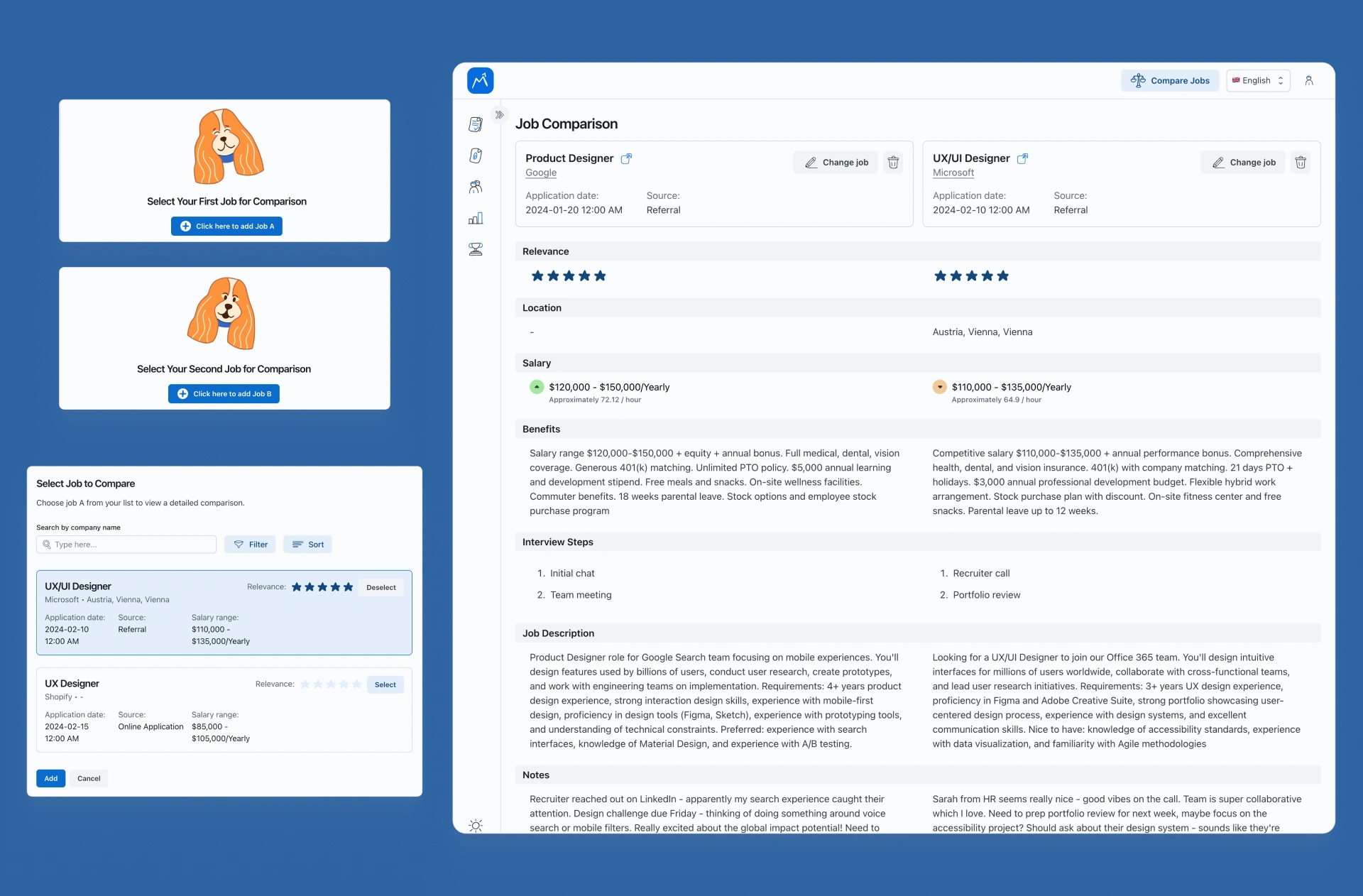
Many people now use job comparison tools instead of spreadsheets because seeing everything at once reduces mental overload when figuring out how to handle multiple job offers, while still leaving room for intuition.
The Long-Term Career Vision Strategy
Step back for a bit and imagine where each position might lead in five or ten years. The highest-paying offer is not necessarily the best when you consider all the pros and cons of competing offers through the lens of long-term goals. Often, it’s the role that puts you in the right environment to grow toward the future you actually want, even if the short-term payoff feels smaller.
Stay Organized Throughout Your Job Search

The Risk vs Reward Framework
Every job comes with risk. Some obvious, some less so. Think about company stability, role clarity, and industry trends.
- Is the business financially sound?
- Is the position well-defined?
- Is the industry growing or shrinking?
Balancing risk against reward helps you avoid choices that look exciting but could cause stress down the line when comparing competing offers. Personal factors matter here too - a role with heavy travel might not work if your life outside of work needs consistency.
The “Best and Worst Case Scenario” Method
This exercise is simple, but surprisingly helpful. Imagine the best possible outcome for each offer, then imagine the worst. What excites you? What could realistically go wrong?
Thinking through extremes clarifies how much uncertainty you’re comfortable with. Talking it through with someone you trust can also surface blind spots you might miss on your own.
The Gut Check
When all the analysis is done, give yourself a moment to hear your intuition. In some instances, your gut feeling about a company or job may be the reflection of subconscious cues about fit and comfort. If one offer just “feels right”, it’s definitely worth listening to. However, this doesn’t mean you’ll turn a blind eye to facts, rather, it’s about letting data and intuition collaborate.
Recording your thoughts or meditating over your past work experience might be a means for you to identify the patterns in what really matters to you.
How to Handle Job Offer Deadlines Professionally
Job offer deadlines create tension because you need to decide between multiple job offers which you have received simultaneously. It is essential to consider that your professionalism takes precedence in helping you navigate these deadlines and ensuring that decisions made are well-informed.
Asking for More Time to Decide
In case you require additional time, just ask for it. This is perfectly normal. Be polite while providing honest information which includes particular evidence to support your statements. Most companies prefer job seekers who want to discuss their selection process with them. Propose a definite date for your reply so that the expectations remain synchronized. It is much better to ask than to force yourself into something whose outcome is uncertain.
How to Decline a Job Offer Gracefully
After you choose a particular option you must politely reject all other job offers, because failure to do so will create problems from accepting multiple job offers. A basic email which thanks the employer for their time will suffice without needing to explain every single detail. Handling this step professionally helps keep doors open for future opportunities. This produces a lasting positive effect that people tend to underestimate.
Conclusion
Having more than one job offer is definitely a good problem to have, but it also requires a lot of thinking. When you view together compensation, benefits, growth, culture, and balance, it becomes easier to choose without feeling the pressure of time. Get organized when you feel lost. If you need to think, take some time. Trust your gut to find the right mix between what you know and what feels right.


